



Description
01. Dramatic Shadowcasting & Spatial Proportions
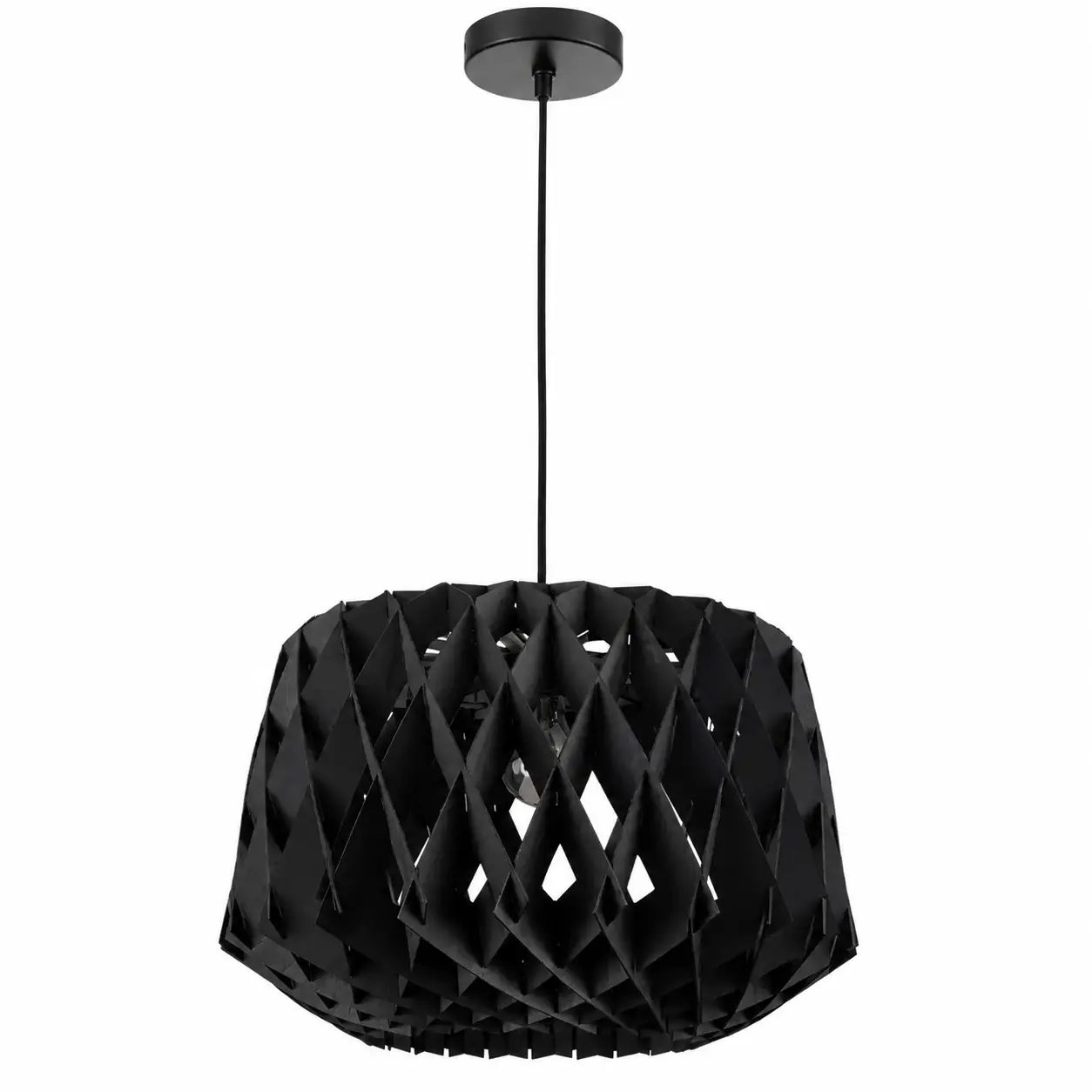
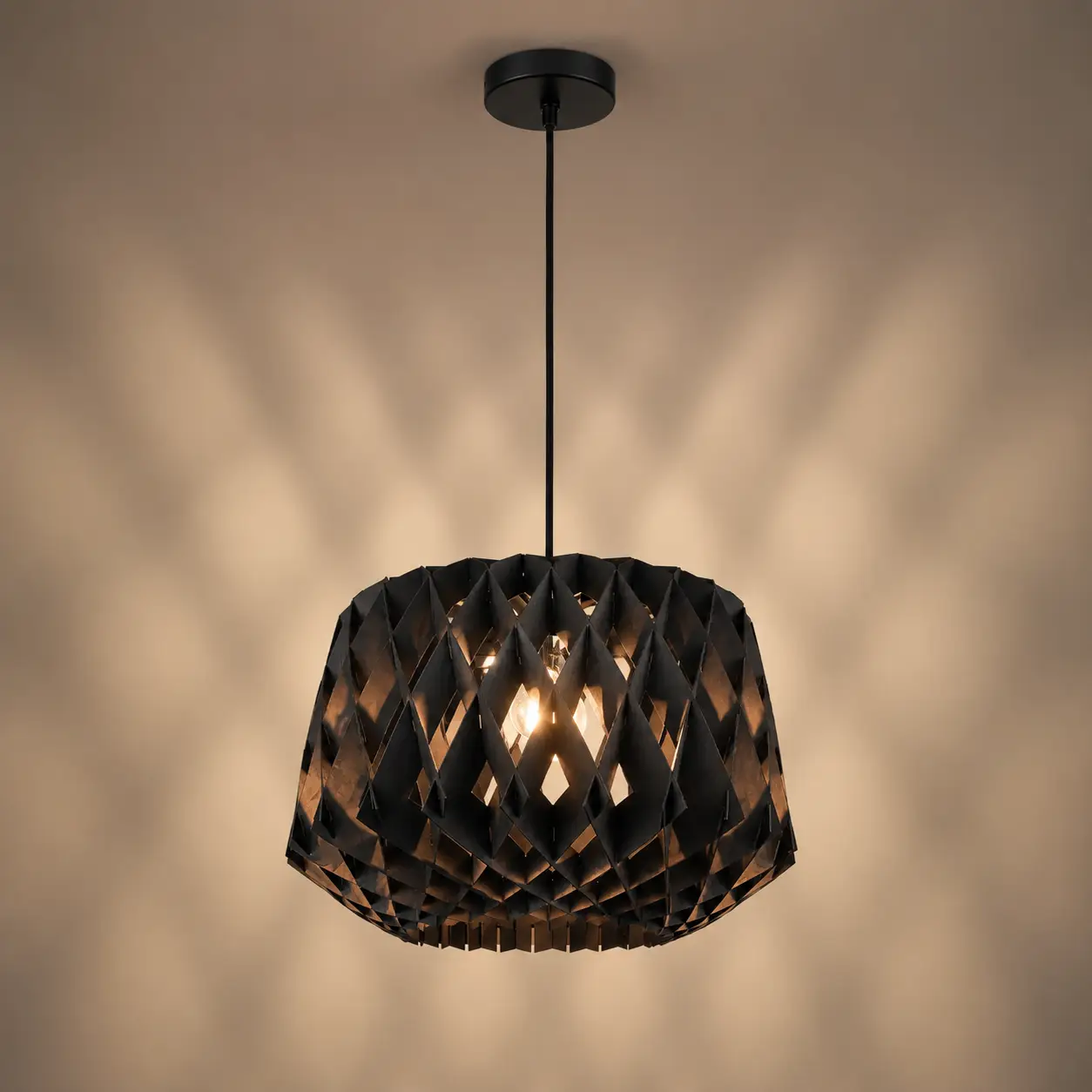
The core philosophy of the Shadow Lattice Pendant lies in its manipulation of negative space. Rather than acting as a passive light source, its complex overlapping lattice patterns project a dramatic interplay of light and dark across vertical planes. For specifiers executing Modern Luxury, Japandi, or High-End Architectural styles, this luminaire transforms minimalist walls into dynamic textures. It serves as a commanding visual anchor when suspended in multi-level entryways, sculptural stairwells, or above monolithic dining configurations.
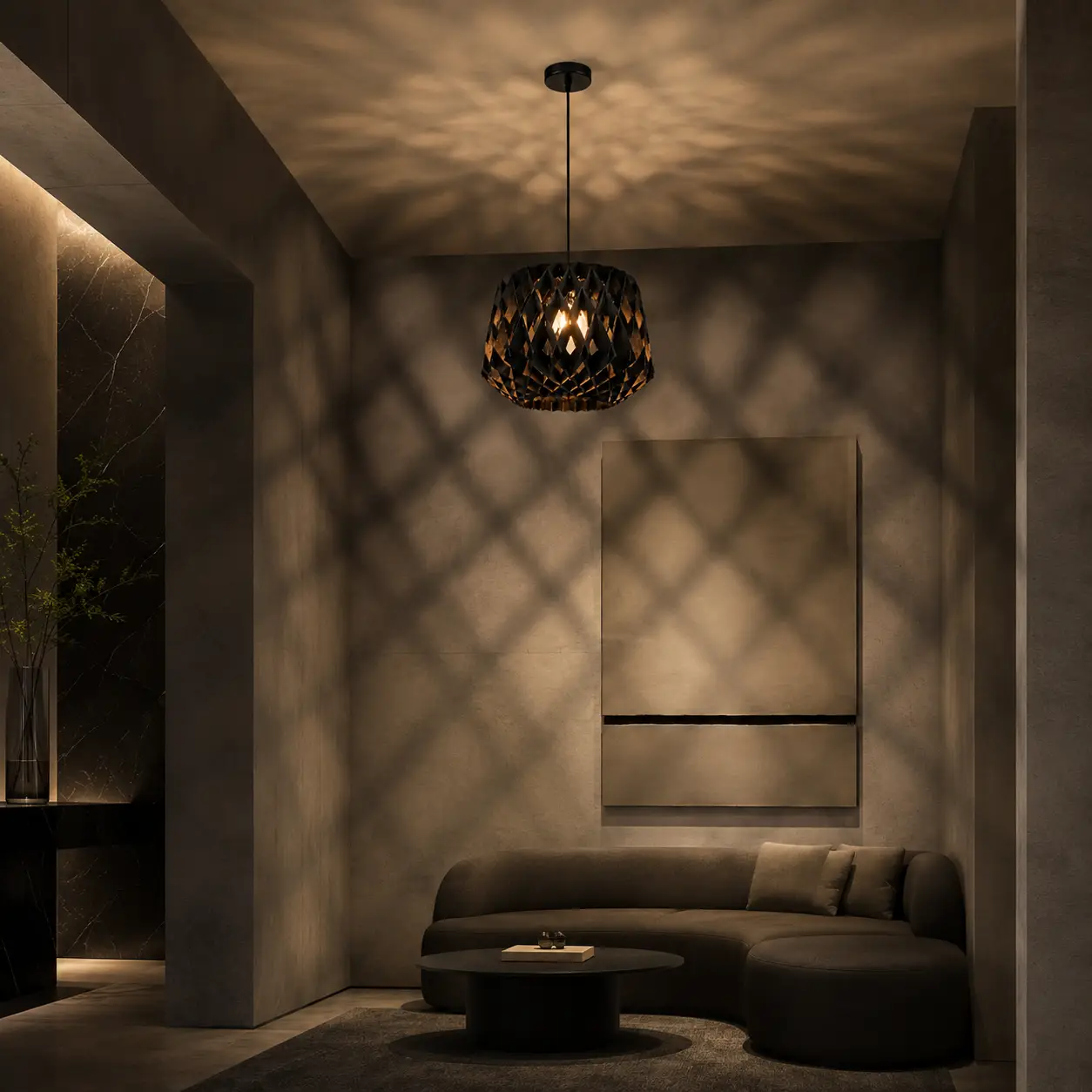
Best paired with dimmable clear filament LED modules to maximize shadow crispness. The shadow radius expands outward proportionally to the distance from neighboring walls, offering incredible ambient versatility.
Visual Prompt: High-contrast architectural lounge with the pendant projecting intricate grid shadows onto textured micro-cement walls.
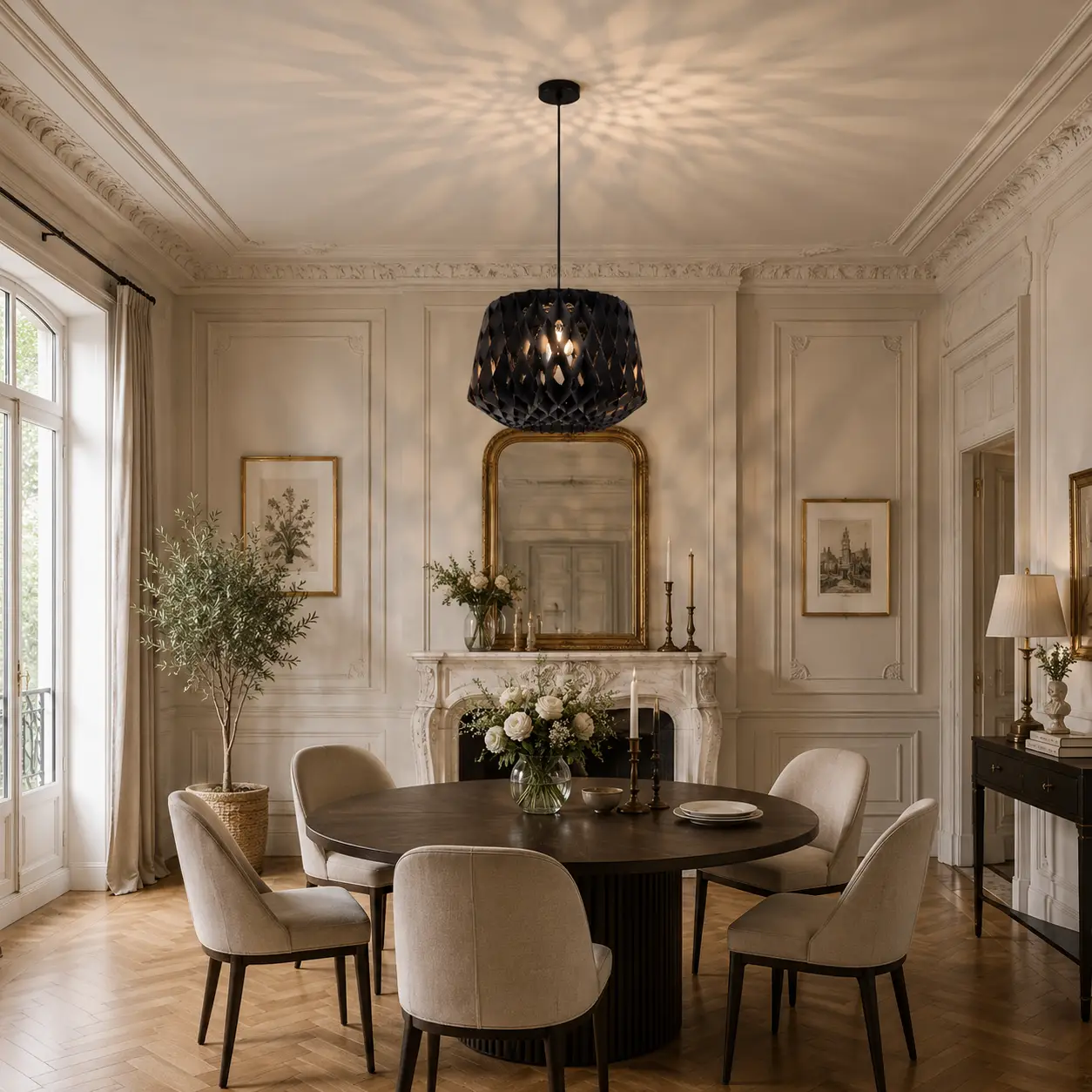
Visual Prompt: A sophisticated dining space with classic crown moldings. The fixture is customized in a warm Satin Gold finish, softening the classical architecture.
02. Supply Chain Durability & Regional Adaptability
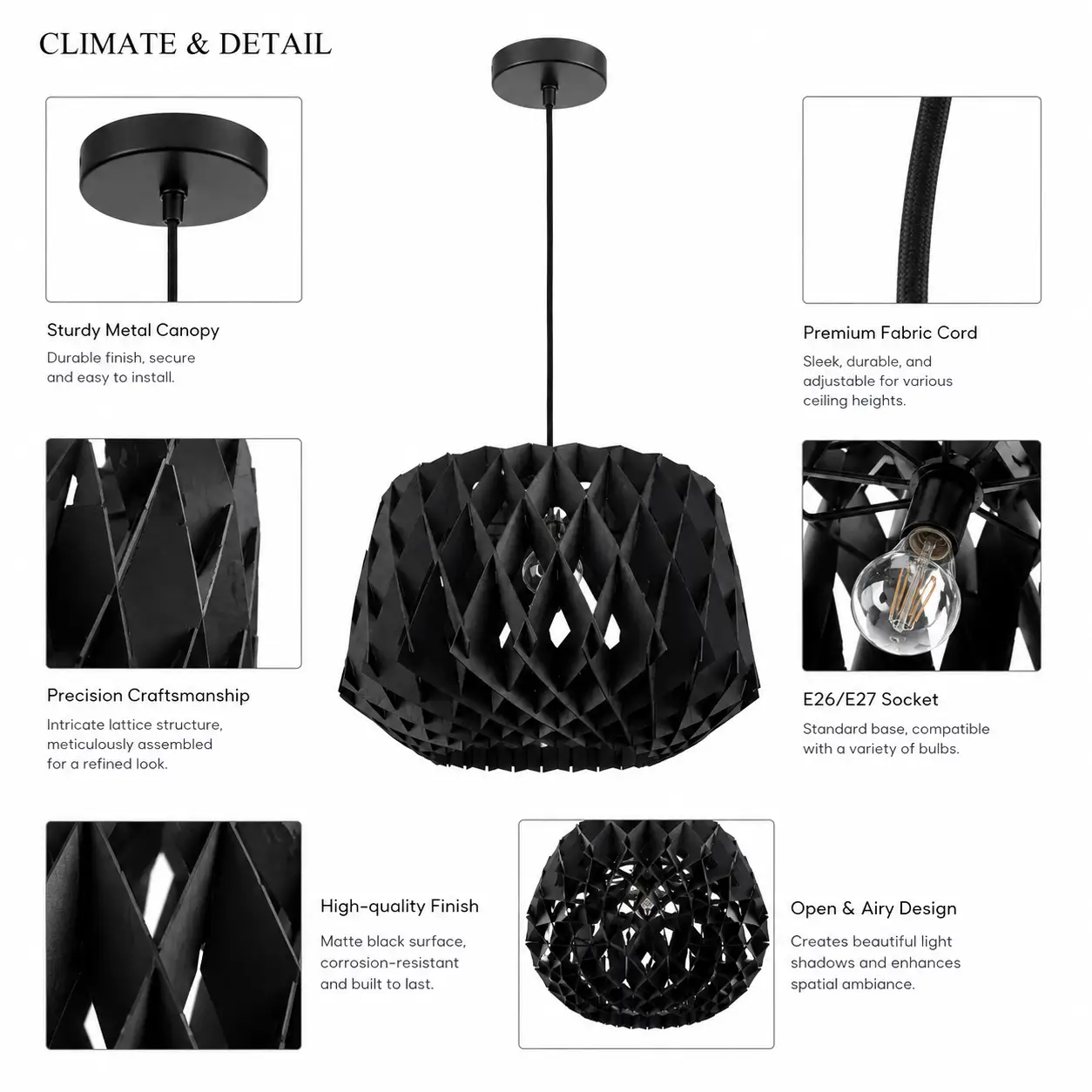
Intricate lattice structures require precision engineering to prevent structural sagging and local environmental degradation. Smile Lighting utilizes state-of-the-art CNC fiber laser cutting and advanced metallurgy to ensure perfectly clean intersections without micro-burrs. For your brand’s international projects—whether located in high-salinity marine air or arid desert properties—our engineering team modifies the substrate matrix to withstand rigorous local cleaning and climatic stress.
Can be upgraded to heavy-gauge marine SUS304/SUS316 with automated multi-layer PVD vacuum plating, guaranteeing a salt-spray-resistant, anti-rust lifecycle.
Engineered with a high-durability, anti-static coating that repels dust settlement. The open-aperture structure permits standard compressed-air or microfiber dusting routines.
Manufacturing Blueprint & Boundary References
B2B PURCHASING COMPLIANCE NOTICE: The parameters detailed below describe our structural baseline case-study. To prevent trade infringement and protect client IP, micro-component schematics, latch lock mechanics, and interior wire routes are omitted. All values are references only and 100% customizable to your commercial criteria.
| Parameter Field | Baseline Reference Blueprint | B2B Engineering Elasticity |
|---|---|---|
| Max Outer Envelope (Fixture Dimensions) | Diameter: 400 mm (15.7″) | Fixture Frame Height: 520 mm (20.5″) | Fully Scalable. Proportions can be re-stretched or expanded into linear multi-light configurations. |
| Suspension Mounting Range | Adjustable Cable: 1800 mm (70.8″) | Maximum OAL: 2400 mm | Modifiable to rigid telescopic steel downrods, decorative chains, or heavy-gauge dual safety wires. |
| Substrate Metal Matrix | Architectural Solid Brass & High-Tensile Structural Carbon Steel | Interchangeable with SUS316 Stainless Steel, or lightweight aircraft-grade 6061 Aluminum. |
| Electroplating & Color Finishes | Deep Gunmetal Shadow Gray & PVD Satin Brass Internal Accents | Available in 40+ contract finishes: Brushed Nickel, Matte Sand Grain Black, Antique Bronze, or custom RAL swatches. |
| Socket & Driver Architecture | 1 x E26 / E27 Heavy-Duty Porcelain Core | Max 60W | Can be engineered with integrated custom high-CRI LED boards, supporting Triac, 0-10V, or DALI protocols. |
| Global Testing Compliance | Pre-tested to match CE, RoHS, and VDE component layouts | Full structural and electrical adaptation for localized UL/cUL (US/Canada), SAA (Australia), or PSE (Japan) markings. |
Have bespoke requirements for specific light patterns, grid density, or demanding regional climates? Our R&D engineering team acts as your ultimate supply chain backbone—strictly adhering to NDA and IP defense protocols to accurately replicate your blueprints and bring your custom designs to life.
Smile Lighting Co., Ltd.
From an aesthetics and interior design perspective, The Shadow Lattice 1-Light Pendant (featured in the 10th photo) is a striking piece that uses “negative space” and “geometric shadow-play” to define the atmosphere of a room.
Based on its design profile, here is a professional commentary:
1. Aesthetic Profile: “The Art of Shadow”
Intricate Geometry: The primary aesthetic driver is the complex, diamond-shaped lattice structure. This design transforms a simple pendant into a sophisticated sculptural object that commands attention even when the light is turned off.
Dramatic Contrast: In the matte black finish (as seen in photo 10), the fixture provides a sharp, bold silhouette against lighter walls. When lit, the black lattice acts as a “mask,” forcing the light through the geometric openings to cast sharp, architectural shadows across the ceiling and walls.
Industrial vs. Organic: While the lattice pattern feels mathematically precise (industrial), the overall “drum” shape and the way it diffuses light give it an organic, lantern-like quality.
2. Interior Design Application
Atmospheric “Mood” Lighting: This is not a fixture intended for bright, utilitarian task lighting. It is a “mood setter”. It is best used in spaces where you want to create a cozy, mysterious, or high-drama environment, such as a lounge, a dark-themed dining room, or an entryway.
Ideal Placements:
The Dining Nook: Hanging this over a small, circular table creates an intimate “envelope” of light and shadow, making the dining experience feel more private and exclusive.
Bedroom Focal Point: Because the lattice softens the light, it is an excellent choice for bedrooms where harsh, direct light is avoided.
The Gallery Hallway: Placing a series of these pendants down a long hallway creates a rhythmic pattern of shadows on the floor and walls, turning a transitional space into a design feature.
Style Synergy: The Shadow Lattice is highly versatile. The black version fits perfectly into Modern Industrial, Urban Loft, or “Moody Maximalist” interiors. The natural wood version (photo 9) leans more toward Boho-Chic or Japandi styles.
3. Professional Styling Tips
Bulb Choice is Critical: Because the bulb is the “engine” that creates the shadows, the type of bulb you choose changes the effect.
Clear Filament LED: Produces sharp, distinct lattice shadows on the walls.
Opal/Frosted Bulb: Softens the shadows, creating a more diffused and gentle glow.
Wall Texture Matters: To get the most out of this fixture, hang it in a room with flat, light-colored walls. If the walls have too much texture or a busy wallpaper, the beautiful shadow patterns created by the lattice will be lost.
Dimmability: Like most sculptural lighting, this fixture should be on a dimmer switch. At lower levels, the “shadow-play” becomes more pronounced and the internal glow of the lattice looks more like a piece of art.
Final Verdict
The Shadow Lattice is for the homeowner who views lighting as “theatrical.” It is a bold choice that moves away from the safe, “invisible” lighting of traditional homes and instead uses light to physically change the texture of the room. It is a high-impact, low-cost way to add immediate architectural character to a space.